What to Expect in First Year Engineering College (and Medical College Too)
What to expect in first year engineering college is a question most students only start asking seriously after the admission letter arrives — right when the celebration wears off, and a quieter, more practical worry sets in. The same is true, arguably more intensely, for NEET qualifiers stepping into MBBS. Two years of coaching-centric preparation, hundreds of mock tests, and a singular focus on one exam suddenly give way to something coaching never fully prepares you for: actual college life, with actual coursework, actual peers, and none of the structured hand-holding that got you here.
This guide by Akash Group of Institutions is written for exactly that gap — the space between “I got in” and “I understand what I’m actually walking into.” It’s especially relevant for business-owner and founder parents, who tend to evaluate transitions the way they’d evaluate any major life change: what changes practically, what support actually exists, and what separates a smooth first year from a genuinely difficult one.
NEET Qualified — Now What? The Steps Nobody Fully Explains
If your child has just qualified NEET, the excitement is real, but so is the confusion about what happens next. Here’s the honest, step-by-step version.
Qualifying for the NEET is not the same as securing a seat. This is the single biggest misunderstanding among first-time NEET families. A qualifying score makes a student eligible to participate in counselling—it doesn’t automatically allocate a seat. The actual admission happens through a separate, multi-round process.
Counselling runs through the Medical Counselling Committee (MCC) for All India Quota seats, alongside separate state-level counselling processes for state quota seats. Students typically need to register for both if they want to maximize their options, provided they meet each state’s specific eligibility criteria.
The process itself has several distinct stages: registration, document verification, choice filling (where students rank preferred colleges and courses in order), and seat allotment based on rank, category, and the choices submitted. This isn’t a single-shot process — it runs across multiple rounds, including a final “mop-up” round for seats that remain unfilled after the earlier rounds.
One of the most common mistakes is misunderstanding “accept and freeze” versus “accept and upgrade.” Accepting and freezing a seat exits a student from further rounds entirely. Accepting and upgrading keeps them in the pool for a potentially better allotment in the next round, while holding their current seat as a fallback. Getting this distinction wrong has cost genuinely qualified students their admission in past years — it’s worth understanding clearly before choice-filling begins, and confirming directly through the official counselling portal rather than relying on secondhand advice.
For families who want to follow this directly rather than through intermediaries, the Medical Counselling Committee’s official portal is the authoritative source for AIQ counselling schedules, seat matrices, and round-wise updates.
Medical College Life vs. Coaching Expectations: The Reality Gap
Here’s what almost nobody tells NEET qualifiers clearly enough: two years of coaching prepares you to clear an exam. It does not prepare you for what medical college actually feels like day-to-day — and the gap between the two catches many first-year students off guard.
Coaching is built around repetition and exam pattern mastery. Medical college is built around volume, application, and a completely different pace. First-year MBBS — covering Anatomy, Physiology, and Biochemistry — involves absorbing an amount of material that dwarfs even intensive NEET coaching, and it comes with practical components (dissection, lab work, clinical postings) that coaching simply doesn’t simulate.
The social and structural environment shifts entirely. Coaching institutes are usually highly structured, with a single-minded academic focus and limited social distraction. Medical college introduces hostel life, a much more diverse peer group, far less parental oversight, and — often for the first time — genuine autonomy over daily schedule and study discipline. Students who relied heavily on external structure during coaching sometimes struggle here, not because they’re less capable, but because the support system that carried them through NEET simply isn’t there anymore.
Clinical exposure changes how students experience “studying.” Unlike coaching, where everything is textbook and practice-test based, medical college — particularly institutions with attached teaching hospitals — introduces early exposure to real patients, wards, and clinical settings. This is often the first moment a student genuinely understands what a medical career will actually involve, and it can be either energizing or disorienting depending on how well the institution eases students into it.
The practical takeaway for parents: the quality of a medical college’s first-year orientation and mentorship support matters just as much as its NEET cutoff rank. A college that treats the coaching-to-college transition seriously — through structured orientation, peer mentoring, and early but well-supervised clinical exposure — tends to produce far more confident second-year students than one that assumes students will simply figure it out.

What to Expect in First Year Engineering College
Engineering students face a structurally different first-year reality, but the underlying transition shock is often just as real.
The syllabus breadth increases sharply, and so does the pace. Unlike school or coaching, where a single subject gets weeks of focused attention, first-year engineering typically covers a broad spread of foundational subjects — mathematics, physics, and introductory engineering concepts — often across multiple branches before formal specialization begins. The pace assumes independent study far more than school or coaching ever did.
Lab and practical components carry real weight. First-year engineering isn’t purely theoretical — workshop practice, computing labs, and foundational design or programming exercises typically begin immediately, and colleges with genuinely well-equipped labs give students a meaningfully stronger foundation than those relying mostly on lecture-based teaching.
Self-directed learning becomes non-negotiable. Engineering coursework leans heavily on problem-solving rather than memorization, and professors generally expect far more independent effort outside class than school ever required. Students coming straight from a highly structured JEE coaching environment sometimes experience the same “structure withdrawal” that medical aspirants do — the difference is that engineering’s first-year workload tends to ramp up gradually across the semester rather than hitting all at once.
Peer and project-based learning starts early. Group assignments, hackathons, and early technical clubs are common in the first year at colleges that take skill-building seriously, and students who engage with these opportunities early tend to build the practical, portfolio-worthy experience that matters far more for future placement than first-year grades alone.
Engineering vs. Medicine First Year Challenges: A Direct Comparison
Both paths are demanding, but the nature of the challenge differs in ways worth understanding clearly if your family is weighing both options.
Factor | Engineering First Year | Medical (MBBS) First Year |
Core challenge | Breadth of foundational subjects, self-directed problem-solving | Sheer volume of material, practical/clinical components |
Pace | Gradual ramp-up across the semester | Intense from day one, high content density |
Structure | Moderate — labs and projects supplement lectures | Highly structured — dissection halls, wards, fixed clinical schedules |
Social adjustment | Group projects, technical clubs, flexible peer engagement | Hostel life, batch-based learning, less individual flexibility |
Biggest first-year risk | Falling behind on self-study discipline | Underestimating content volume and clinical adjustment |
Neither path is objectively “harder” — they’re demanding in different ways, and the right preparation looks different for each. What both share is this: the institution’s first-year support structure — mentorship, lab or clinical infrastructure, and how seriously orientation is taken — has an outsized effect on how smoothly a student adjusts.
How Akash Group of Institutions Supports This Transition
Akash Group of Institutions, based in Devanahalli, Bangalore, is structured around exactly this gap between admission and genuine readiness, across both its medical and engineering institutions.
- Attached hospital for early, supervised clinical exposure for MBBS, nursing, and allied health students, giving first-year medical students structured, real clinical contact rather than a purely textbook first year.

- Modern labs and workshops across engineering departments — including computing labs and technical workshops — that support the hands-on, project-based learning first-year engineering students need to build genuine confidence, not just theoretical knowledge.
- A genuinely multidisciplinary campus, meaning first-year engineering, medical, nursing, and management students share the same institutional ecosystem — reducing the isolation that can make the first-year transition harder for students coming from a highly individual, coaching-centric environment.
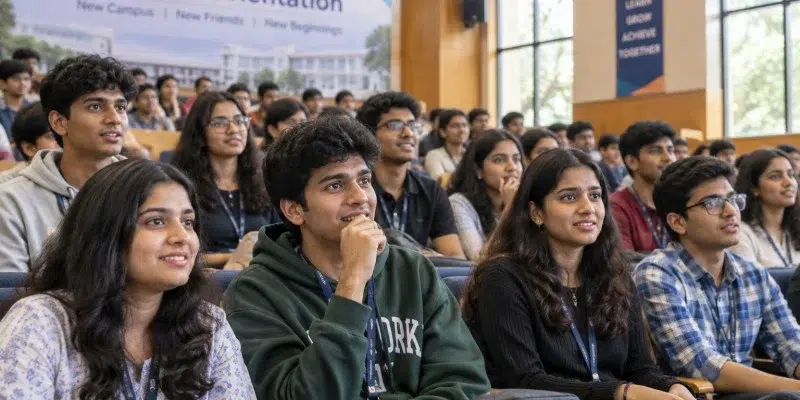
- Structured orientation and mentorship support, designed specifically to ease the jump from school or coaching discipline to genuine collegiate independence — the exact gap this guide has been describing throughout.
Final Thoughts
Getting in is the milestone everyone celebrates. What actually determines a strong four-to-five-year college experience is what happens in the months right after — how well a student adjusts to volume, independence, and a completely different kind of learning than coaching ever demanded. That adjustment is shaped as much by the institution’s support structure as by the student’s own effort.
If you’re evaluating engineering or medical colleges for the upcoming admission cycle, it’s worth asking directly about first-year orientation, mentorship, and lab or clinical infrastructure — not just placement statistics or NEET cutoffs. Akash Group of Institutions’ admissions team can walk you through exactly how first-year students are supported across its medical, engineering, and allied health programs, if you’d like a clearer picture before deciding.
FAQs: First Year Engineering and Medical College
Q: What is the biggest adjustment in first-year engineering college? A: The shift from structured, exam-focused coaching to self-directed, problem-solving-based learning is typically the hardest adjustment, alongside a much broader first-year syllabus than most students expect.
Q: I’m NEET qualified — what should I do next? A: Register for NEET counselling through the Medical Counselling Committee for All India Quota seats, and separately for your state’s counselling if eligible, then carefully complete choice filling and understand the difference between “accept and freeze” and “accept and upgrade” before submitting your seat decision.
Q: Is medical college harder than NEET coaching? A: It’s demanding in a different way. Coaching focuses on exam-pattern mastery through repetition, while medical college introduces a much larger volume of material, hands-on components like dissection and clinical postings, and far less external structure than coaching typically provides.
Q: What’s the difference between engineering and medical first-year challenges? A: Engineering’s first year emphasizes breadth and self-directed problem-solving with a gradually increasing pace, while medical first year involves an intense volume of content from day one alongside structured clinical and practical components.
Q: How can a college make the first-year transition easier? A: Strong orientation programs, accessible mentorship, well-equipped labs or attached clinical facilities, and a supportive peer environment all significantly ease the jump from school or coaching into genuine collegiate independence.